
The Thunder of Saxony
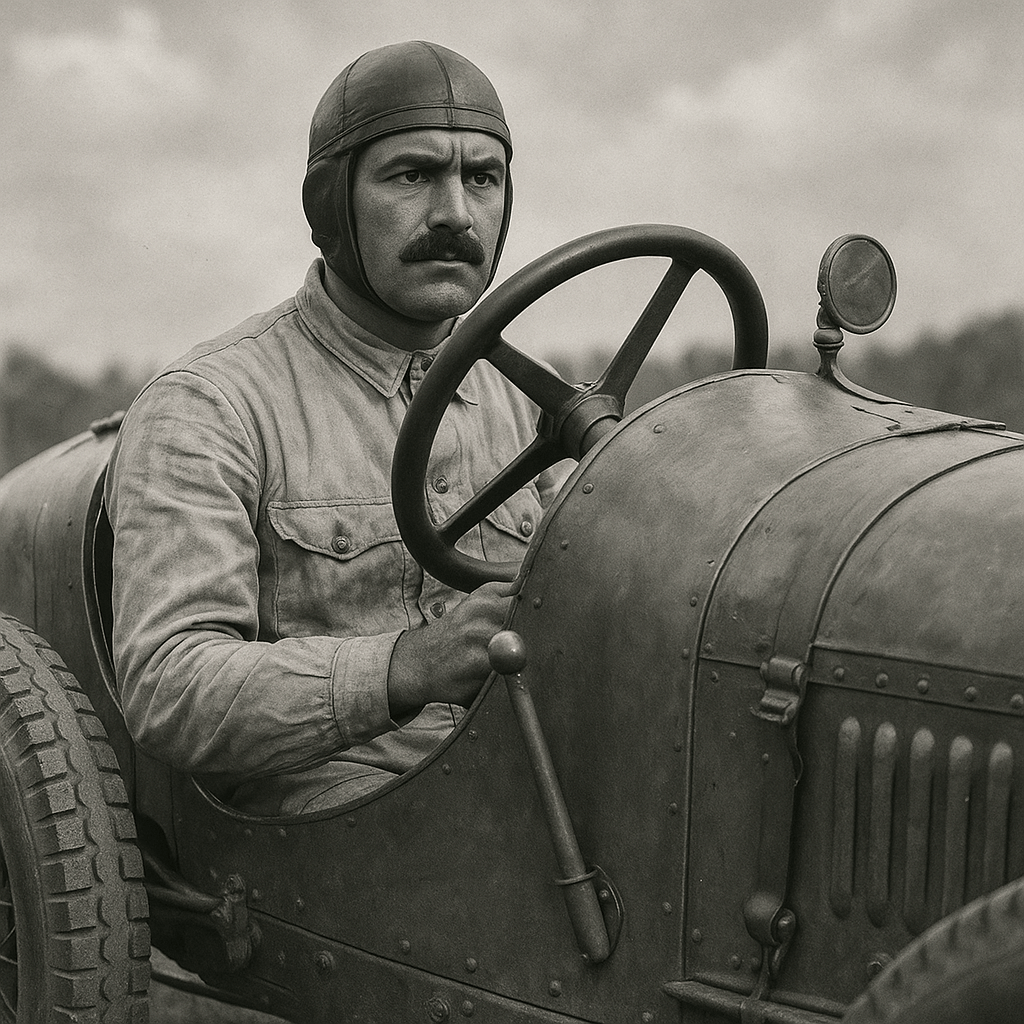
In the smoky morning of October 9, 1896, in Leipzig, Saxony, a boy was born just as the sun rose behind factory chimneys and church steeples. In the morning hours, Siegfried Happe came into the world — the son of a locomotive engineer and a seamstress. No one knew then that this child would one day tame machines far faster than any train his father had ever driven.
A Child of Speed in an Age of Steam
Turn-of-the-century Leipzig was a city of soot, steel, and sound — the perfect cradle for a boy who would fall in love with movement. Siegfried was obsessed with bicycles by age six, engines by age ten, and combustion by age twelve. By the time he turned twenty, in the shadow of the First World War, Siegfried had already assembled a motorbike from scrap and made a name for himself racing down cobbled streets and dirt paths, narrowly missing horses and astonished bystanders.
But Siegfried wasn’t reckless. He was calculated. With a slender build of 181 cm and 71 kg, and a right-handed grip that never trembled, he approached every turn with the steady calm of a chess master. In an age when helmets were leather and brakes were dreams, Happe had what others didn’t: foresight.
The War and the Wheel
When the Great War erupted, Siegfried was drafted. But instead of the trenches, he was assigned as a dispatch rider — racing across battlefields and barbed-wire borders. The war taught him more about machines, strategy, and survival than any racetrack could. By 1919, when peace returned, Siegfried was a hardened man of 23 with a deep love for one thing: Cars.
Roaring into the Golden Age
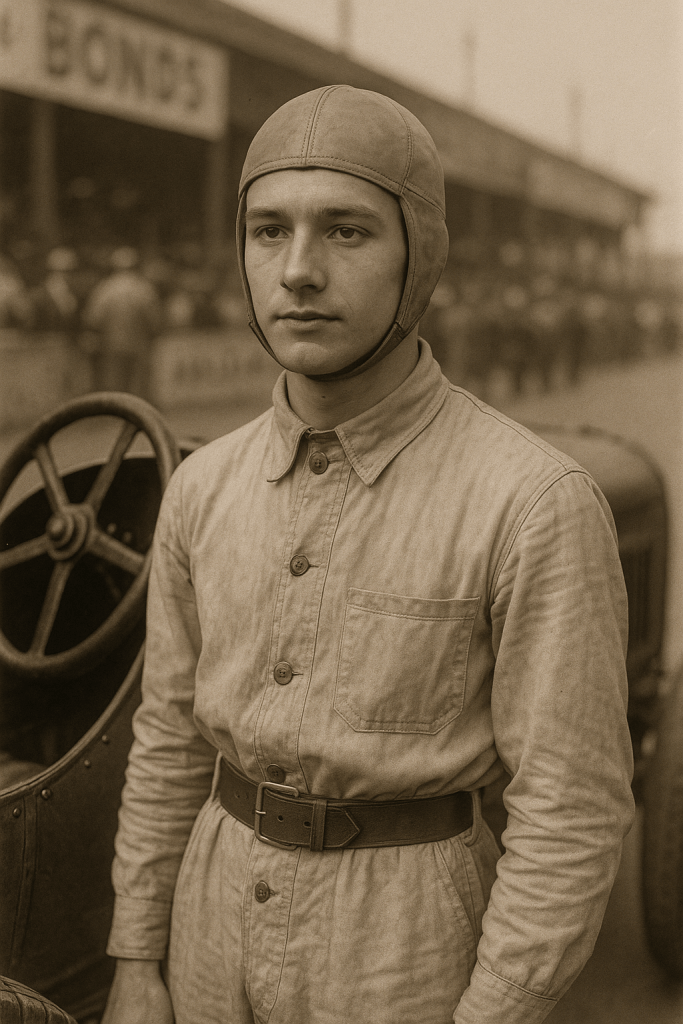
The 1920s were Europe’s rebirth — and for Siegfried Happe, it was the decade of speed. As the Grand Prix scene blossomed in France, Italy, and Germany, so too did Siegfried. He started his first steps in french cars, moving over to italian cars in the process. Having a shot in the 1923 Voisin C6, Happe could get his first real experience in speed.
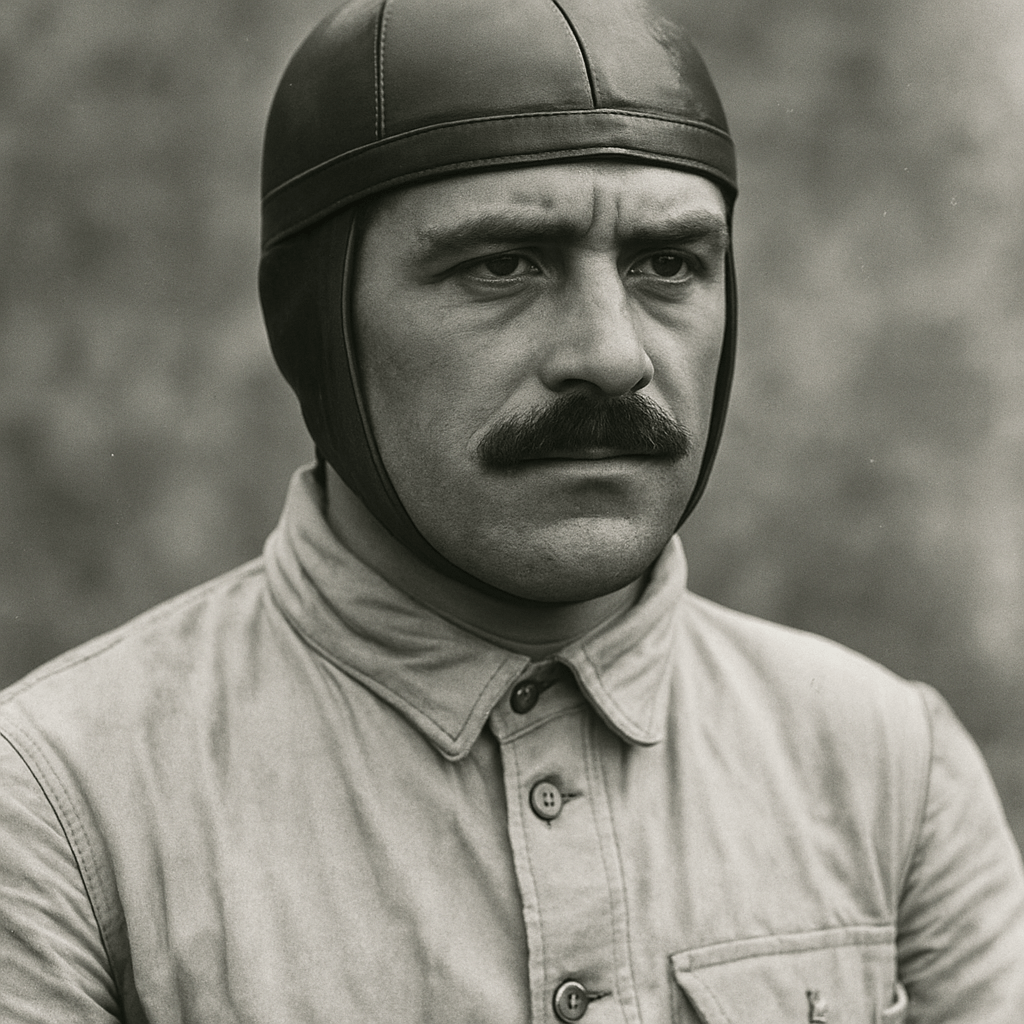
What Happe really liked was reading and writing, so he started writing about the philosophy of racing, which consists of ideas and knowledge he picked up during the years.
His Motto?
“Die Strecke is ehrlich. Sie zeigt den Mann hinter dem Helm.”
“The track is honest. It reveals the man beneath the helmet.”
As a very avid reader, his home consists more of books than any other item. Whatever a racecar driver wrote over the years, Happe surely read it at least once, with several mentions from other drivers in his book from 1927: “Chasing the Flag – Truths and Knowledge about Racing”.
The next step
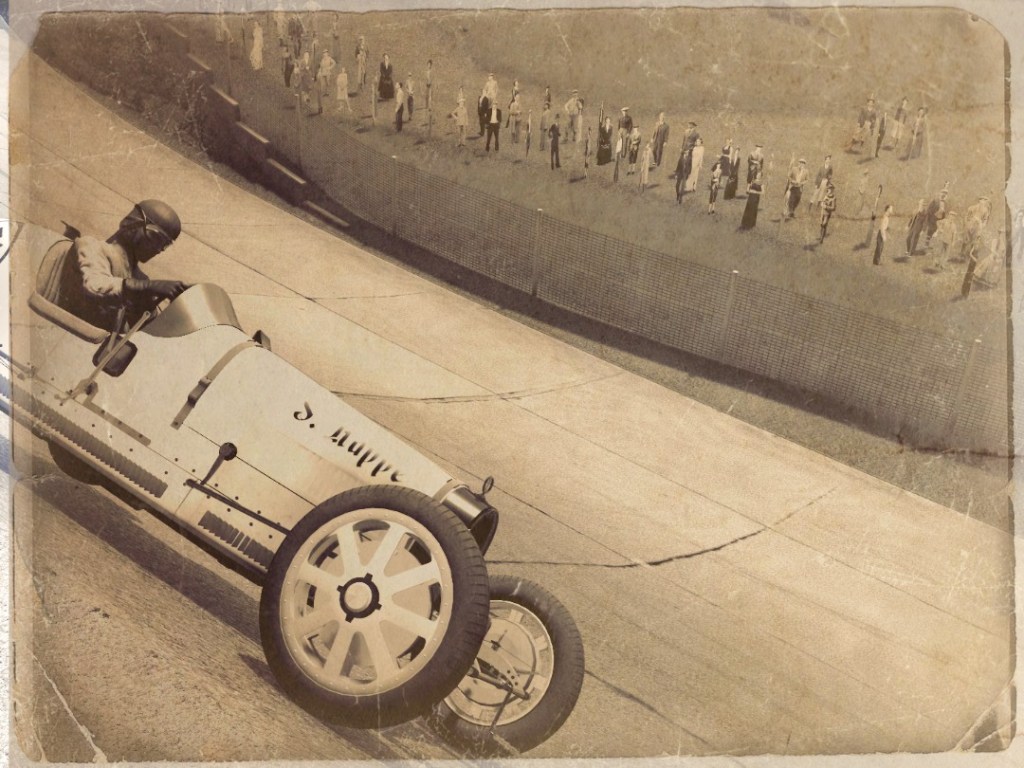
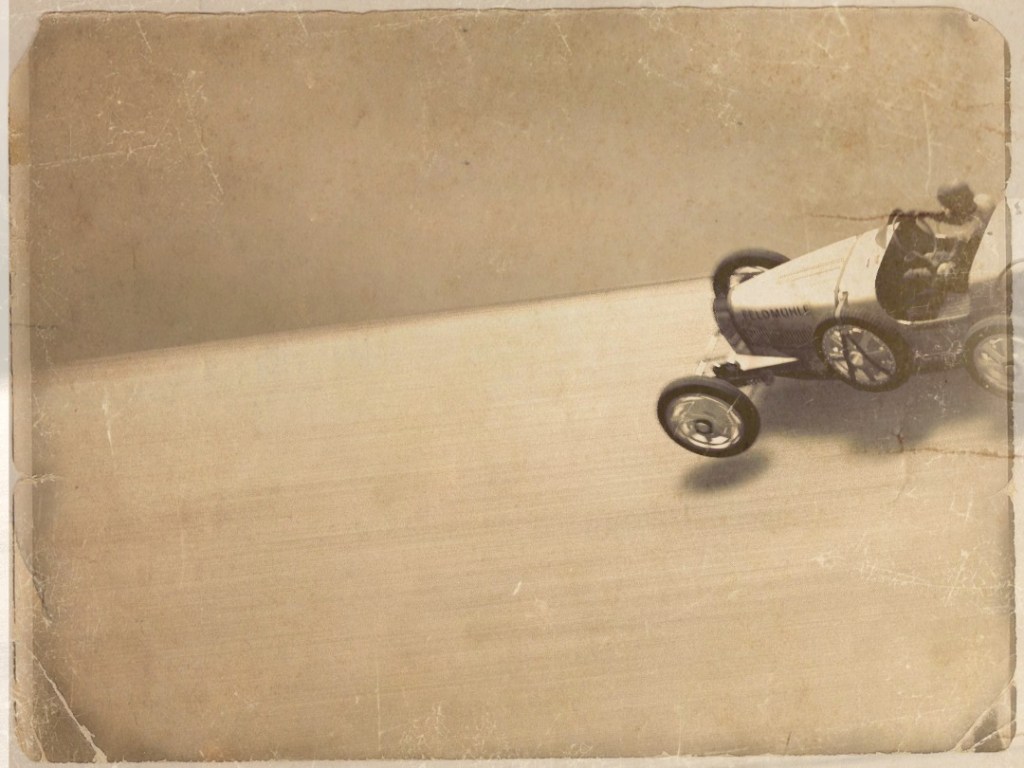
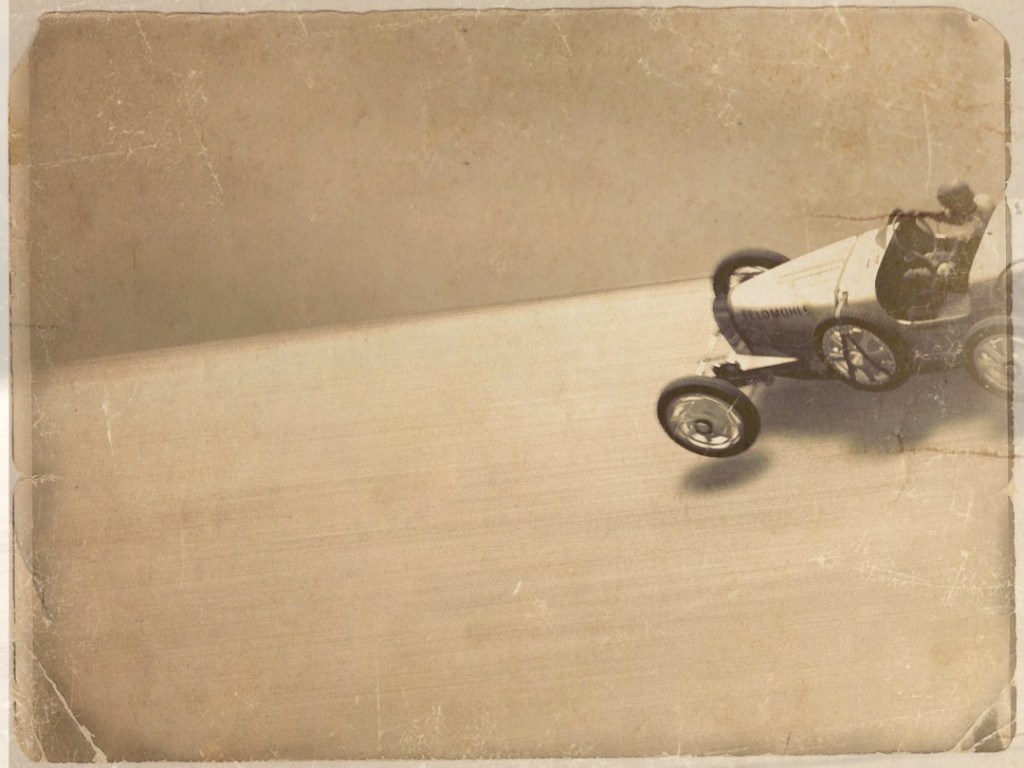
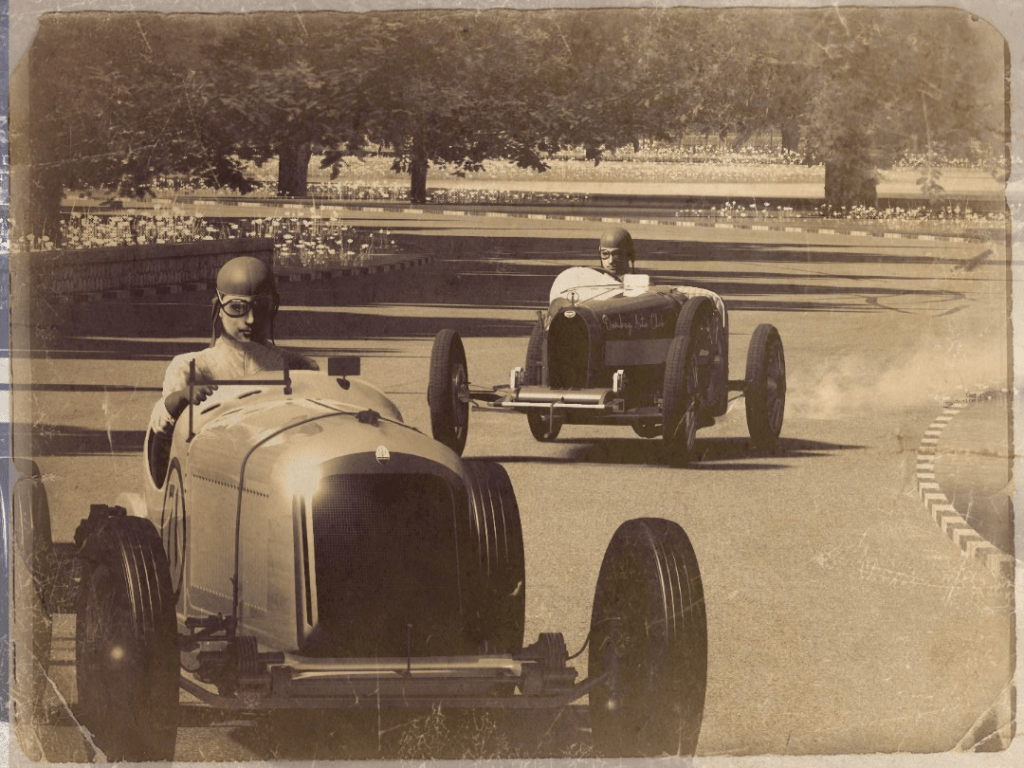
As a gentlemen driver – the 28 year old Happe secured himself a seat in the 32′ Bugatti 51A, sponsored by the paper company – Feldmühle. Happe gets a special livery for his car, not knowing yet, what he can do in said car. Just outside the seaside town of Sitges lies one of the most daring race tracks ever built. Opened in 1923, the Sitges-Terramar Autodrome is a short, fast oval circuit, only 2 kilometers long, but with huge, steep banked turns that make it look more like a rollercoaster than a race track. From the practice session so far, it is appearent, that Happe understands his car. His Bugatti 51A has the fastest lap so far on the 2 kilometer track, which he assures us is just due to the wind being perfect that day. We weren’t informed of his race strategy for this Saturday, but we are excited to see, what Happe can do in his first race!





 Muffler Shop
Leave a comment