
A Legendary Porsche Lineup on the Green Hell
Season 2 of The Harmonic Balancer is shaping up to be an unforgettable showcase of Porsche’s motorsport excellence, with a lineup of ten of the most iconic race cars ever built by the Stuttgart manufacturer.
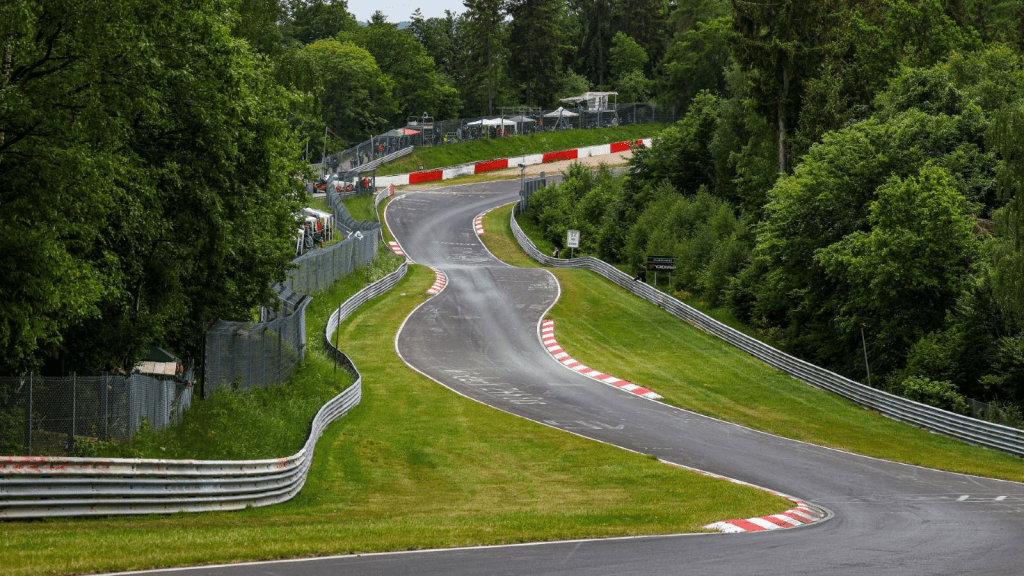
Taking place on the infamous Nürburgring Nordschleife, the season will test engineering, endurance, and raw driver skill on the world’s most demanding track. From the lightweight, agile 718 Spyder to the modern endurance monster that is the 919 Hybrid, each car has a unique story, racing history, and a legacy that cements its place in motorsport history.
Let’s break down each of these iconic machines—their specs, achievements, and why they’re perfect for the Green Hell.
Porsche 944 Turbo Cup (1986-1990) – The Underestimated Warrior

The History & Specs
The Porsche 944 Turbo Cup was one of Porsche’s first factory race series, designed to showcase the performance and balance of the 944’s transaxle chassis. Unlike the standard 944 Turbo, the Cup variant had a stripped-down, race-ready build, featuring an upgraded turbocharger, stiffer suspension, and a lightweight chassis.
With its perfect 50:50 weight distribution, the 944 Turbo Cup wasn’t just fast in a straight line, but also extremely well-balanced through corners. It was a proving ground for Porsche’s engineering and a launchpad for future racing stars.
- Engine: 2.5L Turbocharged Inline-4
- Power: 250 HP
- Weight: 1,100 kg (2,425 lbs)
- Top Speed: 260 km/h (162 mph)
Notable Achievements
- One of Porsche’s first single-make factory racing series
- Helped develop turbo technology for future Porsche race cars
- A favorite in endurance racing and grassroots motorsports
Legacy
Nicknamed “The Transaxle Underdog”, the 944 Turbo Cup proved that handling and precision could rival raw horsepower, making it one of the best-handling Porsches of its era.
Why It’s Perfect for the Nordschleife
The 944 Turbo Cup’s lightweight construction, balanced chassis, and turbocharged power make it an ideal weapon for the Nordschleife. Through Karussell and Hatzenbach, it remains incredibly stable and predictable, allowing drivers to push the limits with confidence.
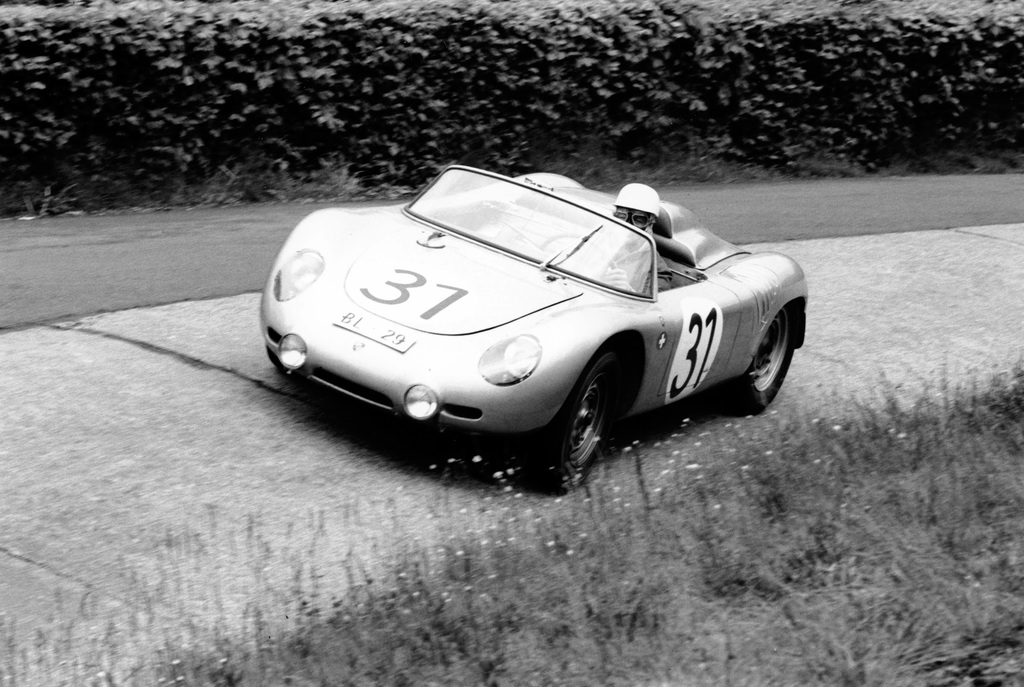
Porsche 718 RS 60 Spyder (1960-1961) – The Feisty Featherweight
The History & Specs
The Porsche 718 Spyder RS was built in the early 1960s as a lightweight, mid-engine endurance racer, designed to compete against the more powerful prototypes of Ferrari and Maserati. The 718 RS was an evolution of the 550 Spyder, focusing on low weight, aerodynamics, and handling rather than outright power.
Despite its modest 1.5L engine, the 718 RS dominated its class, proving that agility and efficiency could beat brute force. It won multiple endurance races, including the Targa Florio and class victories at Le Mans.
- Engine: 1.5L Naturally Aspirated Flat-4
- Power: 160 HP
- Weight: 570 kg (1,257 lbs)
- Top Speed: 240 km/h (149 mph)
Notable Achievements
- Overall Winner of the 1960 Targa Florio
- Class Wins at the 24 Hours of Le Mans
- One of Porsche’s first successful endurance race cars
Legacy
Nicknamed “The Featherweight Fighter”, the 718 Spyder RS was one of the first Porsche race cars to challenge endurance racing’s elite, helping establish Porsche as a dominant force in motorsports.
Why It’s Perfect for the Nordschleife
With ultra-lightweight handling and razor-sharp precision, the 718 Spyder RS can dance through the Nordschleife’s tightest sections, from Hatzenbach to Adenauer Forst. While it lacks the outright speed of modern cars, it makes up for it with superior cornering ability and balance.
Porsche Cayman GT4 Clubsport (2016-Present) – The People’s Porsche

The History & Specs
The Porsche Cayman GT4 Clubsport is a factory-built GT4-class race car, designed to bridge the gap between amateur and professional racing. It was based on the Cayman GT4 road car, but Porsche stripped out the interior, added roll cages and track-tuned suspension, and optimized it for race conditions.
With mid-engine balance and a high-revving Flat-6, the GT4 Clubsport became an instant favorite among privateer racers. It quickly dominated GT4-class racing worldwide, proving that you don’t need insane horsepower to win.
- Engine: 3.8L Naturally Aspirated Flat-6
- Power: 425 HP
- Weight: 1,350 kg (2,976 lbs)
- Top Speed: 290 km/h (180 mph)
Notable Achievements
- Dominated GT4-Class Racing in IMSA, SRO, and VLN (NLS) at the Nürburgring
- One of the most successful GT4 cars ever made
- Designed as a true customer racing car, accessible to privateers
Legacy
Nicknamed “The GT4 Precision Tool”, the Cayman GT4 Clubsport is one of the most balanced and accessible Porsche race cars, making GT racing more competitive and engaging for privateers worldwide.
Why It’s Perfect for the Nordschleife
With mid-engine stability, mechanical grip, and lightweight handling, the GT4 Clubsport is ideal for carving through the Nordschleife’s technical sections, from Metzgesfeld to Wippermann. It’s forgiving yet fast, making it one of the most balanced cars in the lineup.
Porsche 911 GT3 R (2019-Present) – The King of the ‘Ring

The History & Specs
Built specifically for GT3-class endurance racing, the Porsche 911 GT3 R is one of the most dominant cars in modern GT racing. Used in IMSA, GT World Challenge, and the Nürburgring 24H, it combines brutal power with precision handling.
- Engine: 4.0L Naturally Aspirated Flat-6
- Power: 550 HP
- Weight: 1,250 kg (2,756 lbs)
- Top Speed: 310 km/h (192 mph)
Notable Achievements
- Multiple Nürburgring 24 Hours Wins
- IMSA GTD and GT World Challenge Championships
- A dominant force in endurance GT3 racing
Legacy
Nicknamed “The King of the ‘Ring”, the 911 GT3 R is the most successful Porsche GT3 racer ever, proving itself in the toughest endurance races.
Why It’s Perfect for the Nordschleife
With brilliant aerodynamics, massive mechanical grip, and the ability to survive endurance battles, the GT3 R is one of the most balanced cars for the Green Hell.
Porsche 908 LH (1968-1971) – The Long-Tail Bullet
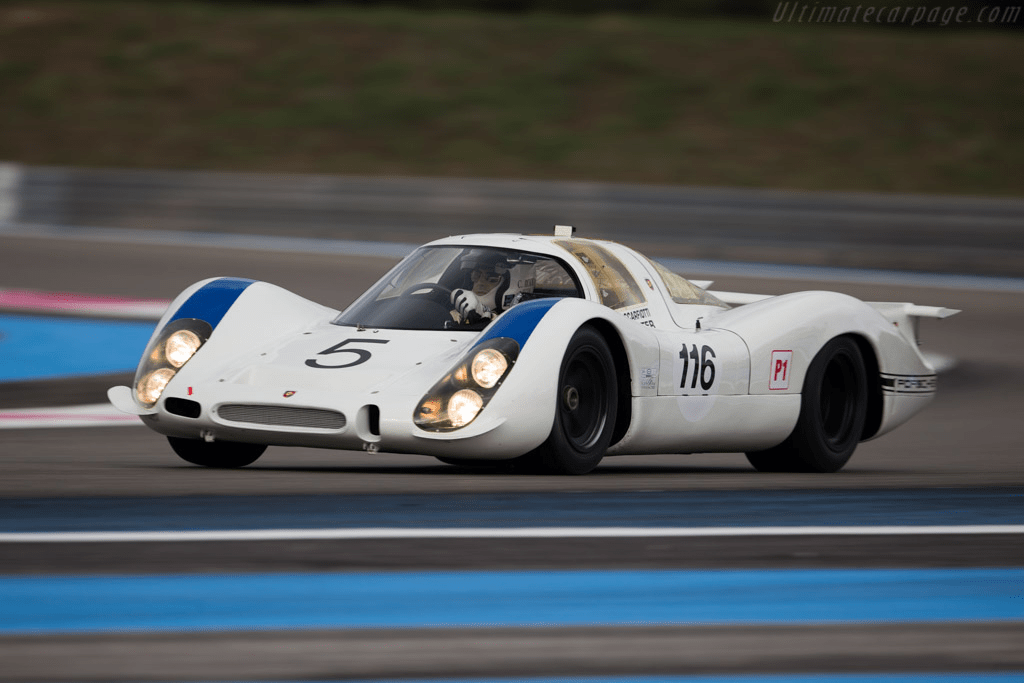
Porsche 908 LH (1968-1971) – The Longtail Contender
The History & Specs
Built as a direct response to FIA’s Group 6 regulations, the Porsche 908 was designed to challenge the might of Ferrari and Ford in endurance racing. The LH (Langheck) variant, with its elongated bodywork, was engineered for maximum top speed and aerodynamic efficiency on long straights like those at Le Mans and Spa.
Powered by a high-revving 3.0L flat-eight engine, the 908 LH combined lightweight construction with advanced aerodynamics. While its early years were plagued by reliability issues, Porsche refined the car into a podium threat, eventually scoring crucial endurance victories.
Engine: 3.0L Naturally Aspirated Flat-8
Power: 350 HP
Weight: 600 kg (1,322 lbs)
Top Speed: 320 km/h (199 mph)
Notable Achievements
- Podium finishes at the 24 Hours of Le Mans
- Overall victory at the 1969 1000km of Spa
- Established Porsche’s endurance racing credibility
Legacy
Nicknamed “The Longtail Contender”, the 908 LH laid the groundwork for Porsche’s later endurance dominance, proving that aerodynamics were just as crucial as raw power.
Why It’s Perfect for the Nordschleife
With its lightweight frame and slippery aerodynamics, the 908 LH flies through the high-speed sections of the Nordschleife. The long tail helps stabilize the car through fast stretches like Döttinger Höhe, while its nimble chassis makes it surprisingly agile through technical sections.
Porsche 911 RSR (2017-2022) – The Mid-Engine Rebel

Porsche 911 RSR (1973-Present) – The GT Icon
The History & Specs
Born from Porsche’s relentless pursuit of GT racing dominance, the 911 RSR has evolved through multiple generations since its 1973 debut. Designed to extract maximum performance from the 911’s rear-engine platform, the RSR has always been a track-focused machine with aggressive aerodynamics, a wide stance, and a naturally aspirated flat-six engine delivering raw, unfiltered power.
Early RSR models were stripped-down, lightweight versions of the 911 Carrera RS, featuring widened bodywork, a ducktail spoiler, and race-tuned suspension. Over the years, the RSR has continued to evolve, incorporating cutting-edge technology and aerodynamic advancements, making it one of the most successful GT race cars ever built.
Engine: 4.2L Naturally Aspirated Flat-6 (Latest Generation)
Power: 515+ HP
Weight: 1,245 kg (2,745 lbs)
Top Speed: 300 km/h (186 mph)
Notable Achievements
- Multiple class victories at the 24 Hours of Le Mans
- A staple in endurance racing, including IMSA and WEC
- One of Porsche’s most enduring and successful GT race cars
Legacy
Nicknamed “The GT Icon”, the 911 RSR has remained Porsche’s flagship endurance racer, proving time and time again that the 911 platform is still a force to be reckoned with.
Why It’s Perfect for the Nordschleife
With its razor-sharp handling, immense downforce, and relentless grip, the 911 RSR thrives on the Nordschleife’s demanding corners. Whether carving through Fuchsröhre or attacking the Karussell, its rear-engine balance and precision-engineered aerodynamics make it a lethal weapon on the Green Hell.
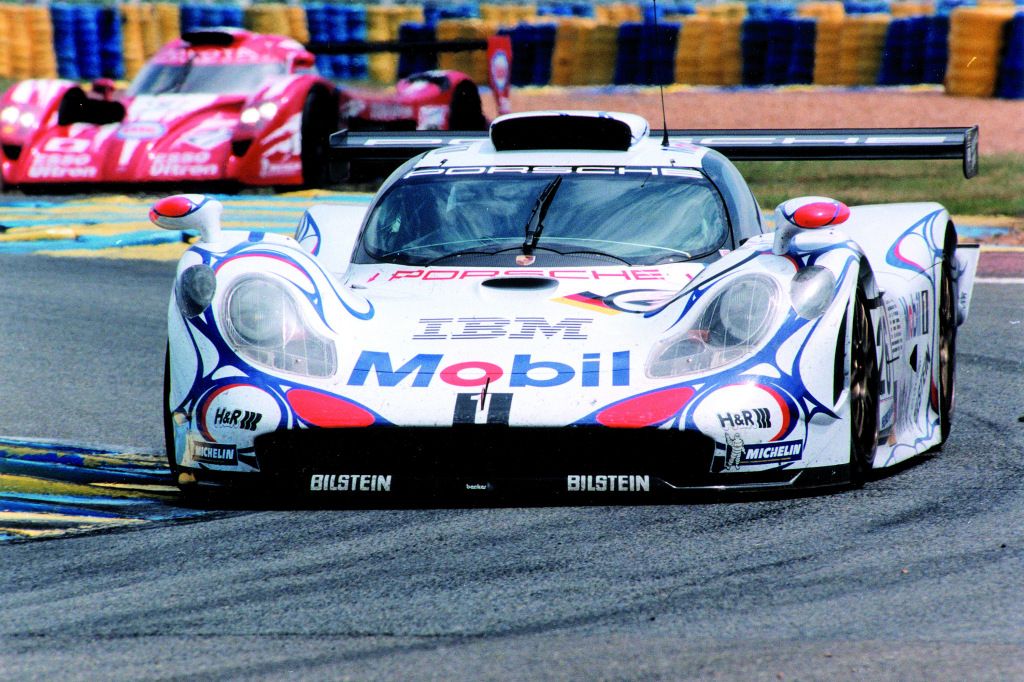
Porsche 911 GT1 (1996-1998) – The Le Mans Outlaw
The History & Specs
Blurring the lines between a road car and a prototype, the 911 GT1 was Porsche’s answer to the FIA GT1 regulations of the late 1990s. Unlike traditional 911-based race cars, the GT1 had a mid-engine layout, borrowing heavily from Porsche’s endurance racing expertise.
With a carbon-fiber chassis, a twin-turbocharged flat-six, and radical aerodynamics, the GT1 was one of the most advanced race cars of its era. It clinched Porsche’s 16th overall victory at Le Mans in 1998 before rule changes forced its retirement.
Engine: 3.2L Twin-Turbocharged Flat-6
Power: 600 HP
Weight: 1,050 kg (2,315 lbs)
Top Speed: 330 km/h (205 mph)
Notable Achievements
- Overall winner of the 1998 24 Hours of Le Mans
- One of the last GT1-class homologation specials
- A precursor to modern hypercar prototypes
Legacy
Nicknamed “The Road-Going Prototype”, the 911 GT1 was one of the wildest Porsche race cars ever built, bridging the gap between endurance prototypes and GT racing.
Why It’s Perfect for the Nordschleife
With brutal turbocharged power and immense downforce, the GT1 attacks the Nordschleife with ruthless efficiency. It’s a monster through the high-speed sections like Schwedenkreuz, yet agile enough to carve through tight corners with precision.
Porsche 917K (1970-1971) – The Le Mans Legend
The History & Specs
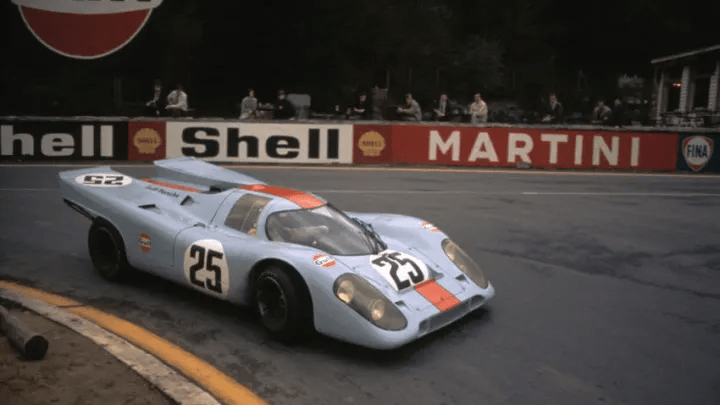
The 917K (Kurzheck, or “short tail”) is one of the most iconic race cars in history. Built to dominate endurance racing, it combined a lightweight tubular chassis with a monstrous flat-12 engine, making it one of the fastest cars of its era.
After early handling struggles, Porsche refined the 917K into an unstoppable force, securing back-to-back Le Mans victories in 1970 and 1971.
Engine: 4.9L Naturally Aspirated Flat-12
Power: 620 HP
Weight: 800 kg (1,764 lbs)
Top Speed: 362 km/h (225 mph)
Notable Achievements
- Winner of the 1970 & 1971 24 Hours of Le Mans
- Helped establish Porsche as a dominant endurance racing manufacturer
- Featured in the film Le Mans starring Steve McQueen
Legacy
Nicknamed “The Le Mans Legend”, the 917K is one of the most revered race cars of all time, forever linked to Porsche’s endurance racing legacy.
Why It’s Perfect for the Nordschleife
With raw power and aerodynamics designed for high-speed tracks, the 917K would be an absolute missile down the Nordschleife’s long straights. Its lightweight build and massive downforce make it a terrifyingly fast machine through the fast sweeps of Flugplatz and Bergwerk.
Porsche 962C Longtail (1985-1994) – The Group C Monster

The History & Specs
An evolution of the dominant 956, the Porsche 962C Longtail was engineered for the world’s fastest endurance circuits. Featuring an extended body for superior aerodynamics and a turbocharged flat-six, it became a staple of Group C racing.
With victories at Le Mans, Daytona, and Sebring, the 962C remains one of the most successful prototypes in motorsport history.
Engine: 3.0L Twin-Turbo Flat-6
Power: 700+ HP
Weight: 850 kg (1,874 lbs)
Top Speed: 380 km/h (236 mph)
Notable Achievements
- Overall winner at Le Mans in 1986 & 1987
- One of the most dominant Group C prototypes ever built
- A favorite among privateer racing teams
Legacy
Nicknamed “The Group C Monster”, the 962C Longtail epitomized the peak of Group C engineering, with speed and efficiency unmatched in its time.
Why It’s Perfect for the Nordschleife
The 962C’s immense straight-line speed would obliterate records on the Nordschleife’s high-speed sections. With its superior aerodynamics, it would remain planted through fast curves like Mutkurve, making it a true endurance racing weapon.
Porsche 919 Hybrid (2014-2017) – The Technological Titan
The History & Specs
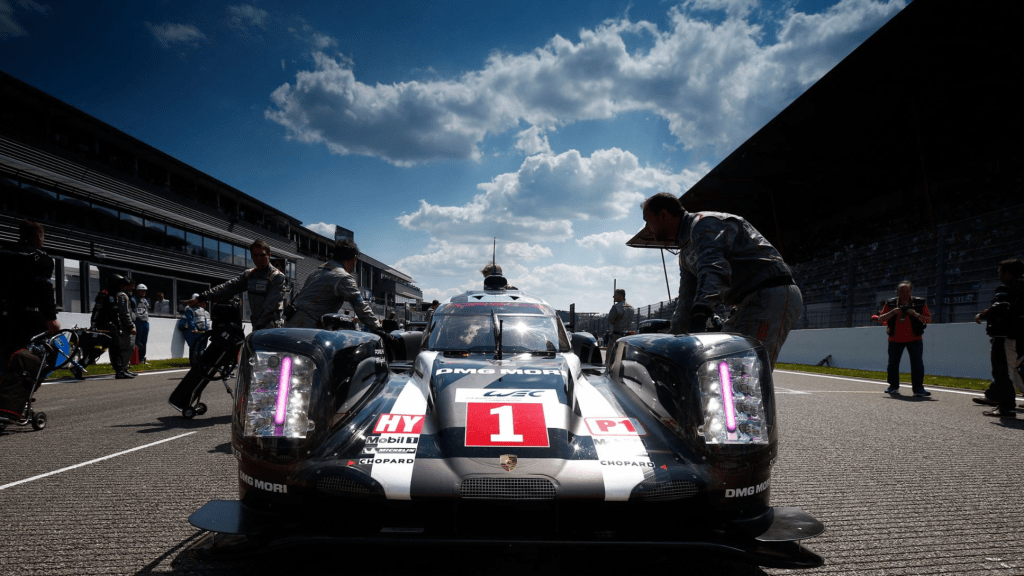
Built to conquer the FIA World Endurance Championship (WEC) and reclaim Porsche’s dominance at Le Mans, the 919 Hybrid was a cutting-edge prototype that blended turbocharged power with advanced hybrid technology. Designed under the LMP1 regulations, it combined a 2.0L V4 turbo engine with a high-performance electric system, utilizing regenerative braking and exhaust energy recovery to maximize efficiency.
Despite initial struggles in its debut season, Porsche refined the 919 into an endurance racing juggernaut, securing three consecutive Le Mans victories from 2015 to 2017 and multiple world championships.
Engine: 2.0L Turbocharged V4 + Hybrid System
Power: 900+ HP (Combined)
Weight: 875 kg (1,929 lbs)
Top Speed: 340 km/h (211 mph)
Notable Achievements
- Three-time winner of the 24 Hours of Le Mans (2015, 2016, 2017)
- Multiple WEC titles, cementing Porsche’s hybrid dominance
- The 919 Evo set an all-time Nürburgring lap record (5:19.546) in 2018
Legacy
Nicknamed “The Tech Titan”, the 919 Hybrid marked a new era of endurance racing, showcasing Porsche’s ability to fuse traditional race engineering with cutting-edge hybrid technology.
Why It’s Perfect for the Nordschleife
With immense downforce, active aerodynamics, and a hybrid boost that delivers instant torque, the 919 Hybrid is tailor-made for the Nordschleife. Its Evo version shattered the all-time lap record, proving that Porsche’s hybrid technology is as dominant on the Green Hell as it was at Le Mans. From Adenauer Forst to Pflanzgarten, the 919 Hybrid redefines what’s possible on one of the world’s most demanding circuits.
Final Thoughts: A Grid Built for the Green Hell
With a mix of legendary endurance prototypes, GT machines, and historic race cars, Season 2 of The Harmonic Balancer is set to deliver some of the most intense racing on the Nordschleife.
Each car is a piece of Porsche’s motorsport DNA, from the featherweight 718 Spyder RS to the dominant 919 Hybrid. Some will conquer the high-speed straights, while others will dance through the corners with unmatched agility.
One thing is certain – only the best will survive the Green Hell.





 Muffler Shop
Leave a comment